The archaeology of Trentino: Roman Trento and the pile dwellings of Ledro
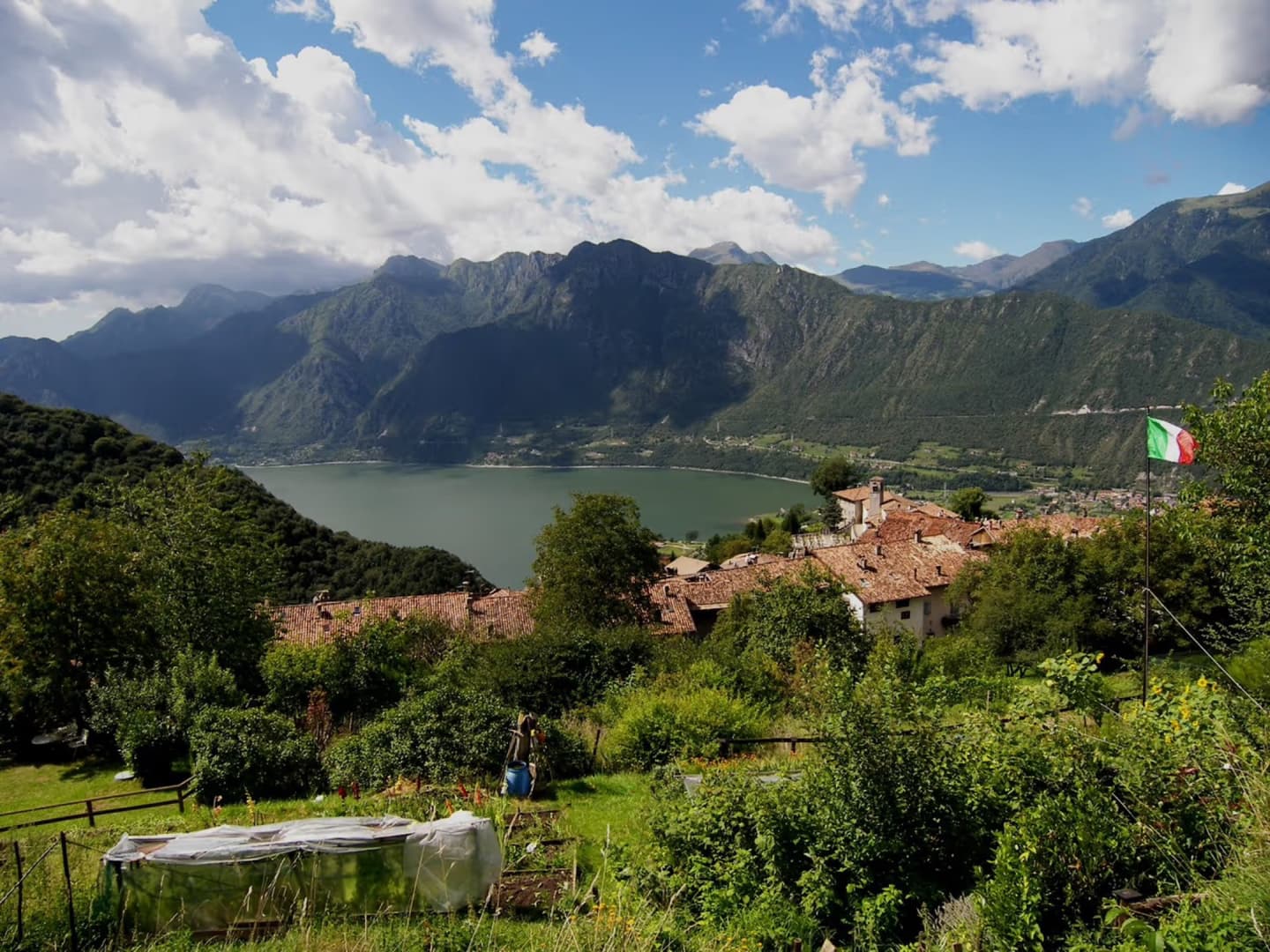
Trentino tells a story far older than its mountains and lakes. Beneath the streets of Trento rests a Roman city, on the shore of an alpine lake a village from four thousand years ago survives, and even the name of the city was born from three hills. These are places where you can walk literally inside the past, among mosaics, prehistoric wooden poles and the remains of ancient fortifications. On this journey we take you to discover six ancient and archaeological sites in Trentino, with what makes them special and how to reach them. We at Italy Holiday have been welcoming guests to this land for a long time, and these are the places we would recommend to anyone who loves to feel the breath of history.
1. Tridentum, the Roman city beneath Trento
Beneath Piazza Cesare Battisti, in the heart of Trento, a true Roman city lies hidden. The Underground Archaeological Space of the Sas preserves about 1,700 square metres of the ancient Tridentum, founded in Roman times and called "splendidum municipium" by the Emperor Claudius in 46 AD. Here you walk on paved streets, you see mosaic floors, the remains of a tower, a stretch of the ancient eastern walls, part of the sewer network and a glassmaker's workshop.
These remains came to light in the 1990s, during the restoration works of the Teatro Sociale. It is a surprising visit, especially for those travelling with children: 3D and virtual-reality reconstructions bring the Roman quarter back to life as it was two thousand years ago, with panels in English too. It is in the historic centre, a few minutes on foot from Piazza del Duomo. Opening times can change, so it is worth checking them on the official website before your visit.
2. Piazza Cesare Battisti, the square above the ancient city
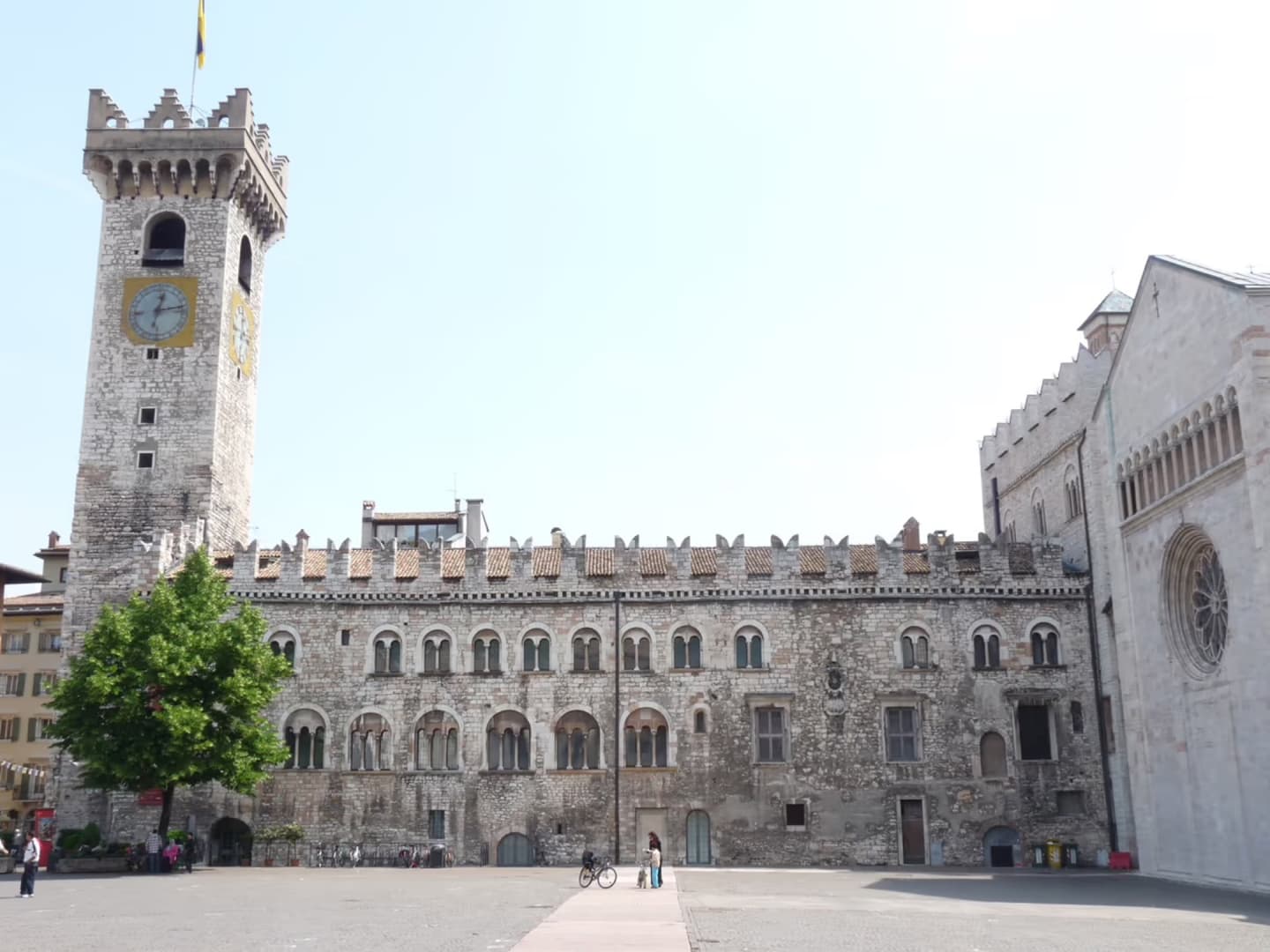
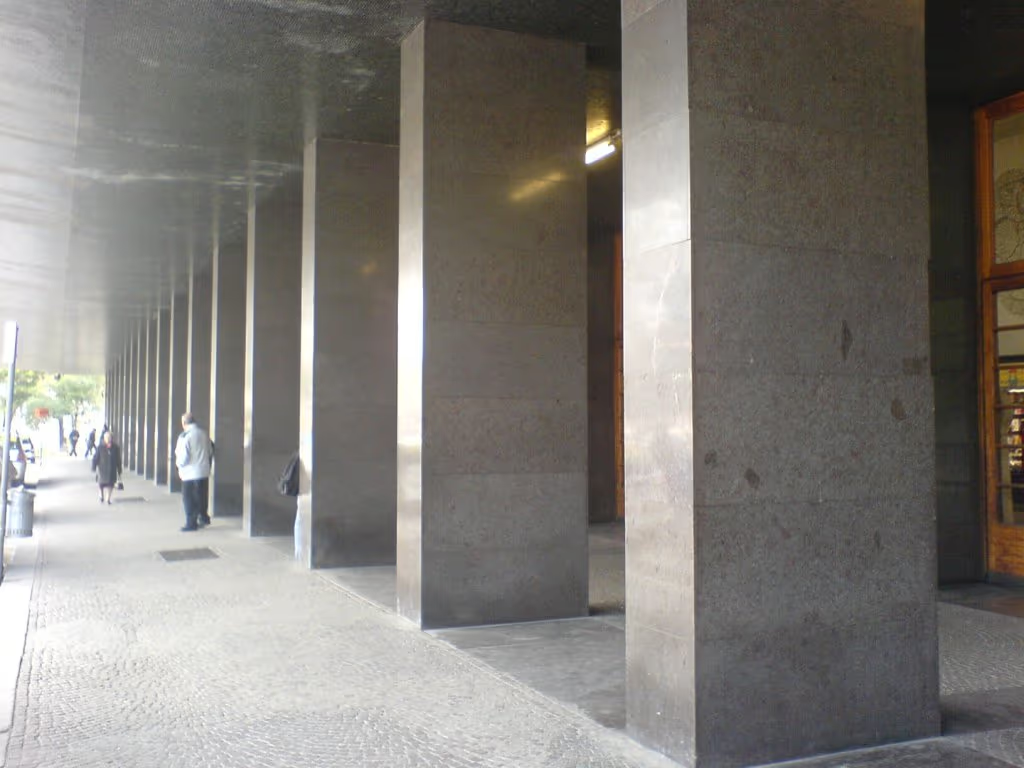
On the surface, Piazza Cesare Battisti is an elegant square in the centre of Trento, with rationalist buildings rebuilt in the 1920s. Few imagine that right under their feet, in those 1,700 square metres, an entire quarter of Roman Trento extends: streets, houses with mosaics and a long stretch of the city walls. It is the point where the modern city and the ancient one overlap perfectly.
The square takes its name from Cesare Battisti, an important figure in Trentino history, and is today a place of passage and city life. From here you go down into the Underground Archaeological Space to visit the Roman remains. It is in the historic centre, a few steps from Piazza del Duomo, and is easily reached on foot from the station.
3. The Pile Dwelling Museum of Lake Ledro, a Bronze Age village
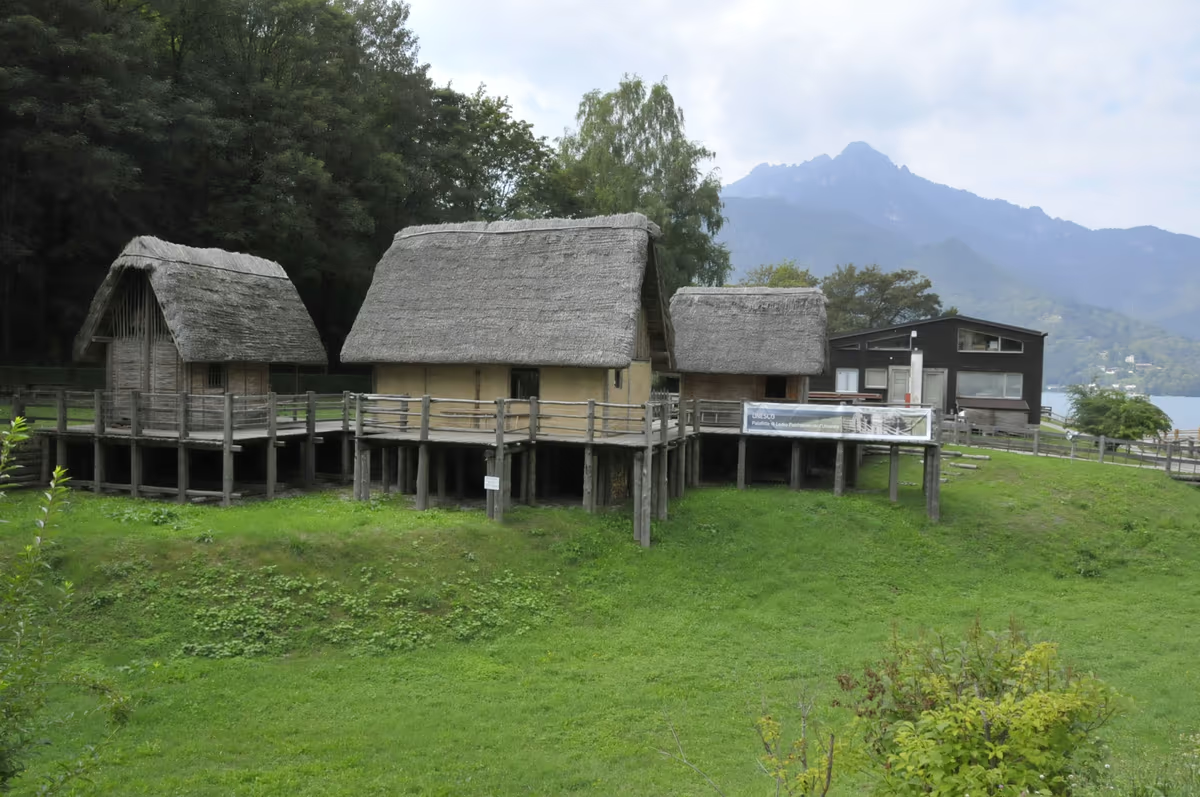
On the shore of Lake Ledro, in Molina di Ledro, lies one of the most important prehistoric sites in Europe. The Pile Dwelling Museum and its archaeological park stand over an ancient village of Bronze Age pile dwellings. The remains were rediscovered in the autumn of 1929, when the level of the lake was lowered to build a hydroelectric plant: more than ten thousand wooden poles driven into the lakebed emerged from the shore.
The village dates to a period between about 2200 and 1350 BC, and has been on the UNESCO World Heritage list since 2011, together with other pile dwelling sites of the Alpine arc. Today you can see the original finds indoors and the reconstructed pile dwelling huts on the shore, which bring daily life from four thousand years ago back to life. It is a perfect place for families and for those who love history. Opening times can vary, so it is worth checking them on the official website.
4. Doss Trento, the ancient hill above the city
Doss Trento is the green hill that rises above the city, along the Adige river. Its ancient name is Monte Verruca, and its history goes back a very long way: traces of human presence from prehistoric times have been found here. On its summit, excavations brought to light the remains of an early Christian basilica, one of the first churches in the area, linked to the centuries of the invasions, when the inhabitants took refuge on the fortified height.
Today Doss Trento is a nature park with protected woodland, wide meadows and splendid views of the city and the Adige valley. At the top there is also the Mausoleum dedicated to Cesare Battisti, with its classical columns. It is an ideal place for an easy walk that combines nature and ancient history. It is reached from the centre of Trento, climbing up towards the hill.
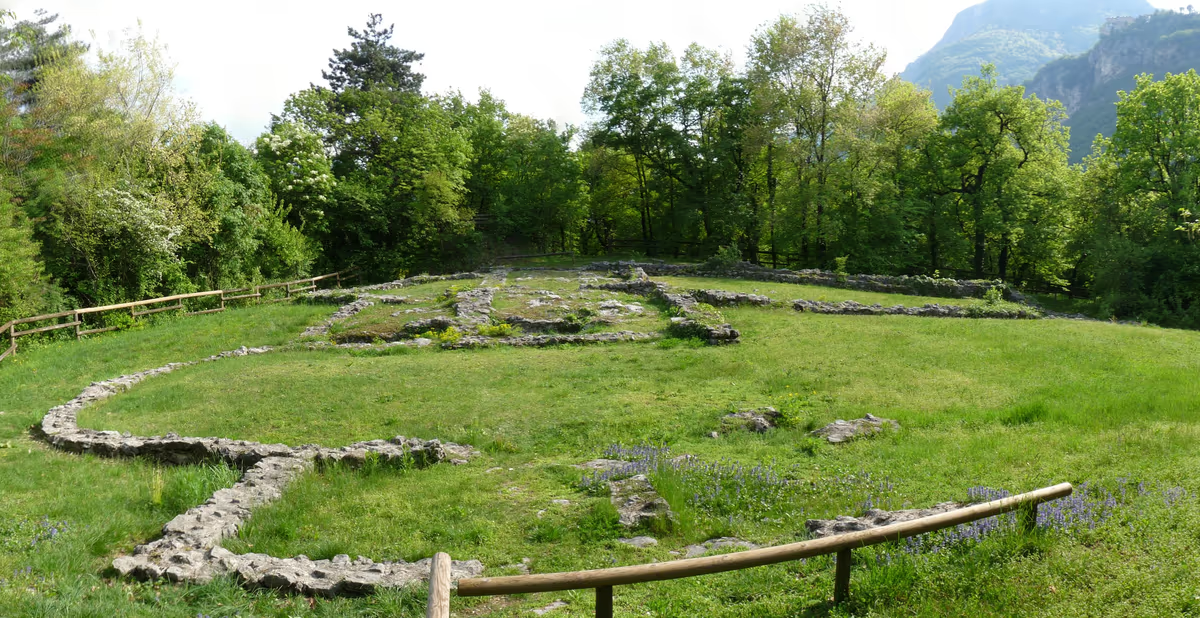
5. Dosso di San Rocco, one of the three hills that gave Trento its name
The Latin name of Trento, Tridentum, means "the three teeth", and according to tradition it refers to the three hills that surround the city: Doss Trento, Dosso di Sant'Agata and Dosso di San Rocco. To walk on one of these heights is to touch the very origins of the city's name. Dosso di San Rocco rises to about 460 metres and is today a large botanical park, the Bosco della Città, opened in 1999.
Among the trees of the park lie the remains of an ancient fortification, built over time above a small chapel dedicated to San Rocco, in a spot that for centuries held strategic value along the route towards the Valsugana. It is a quiet place, made of shady trails and viewpoints over the city and the Adige valley. It is reached from the southern part of Trento, climbing the hill on foot.
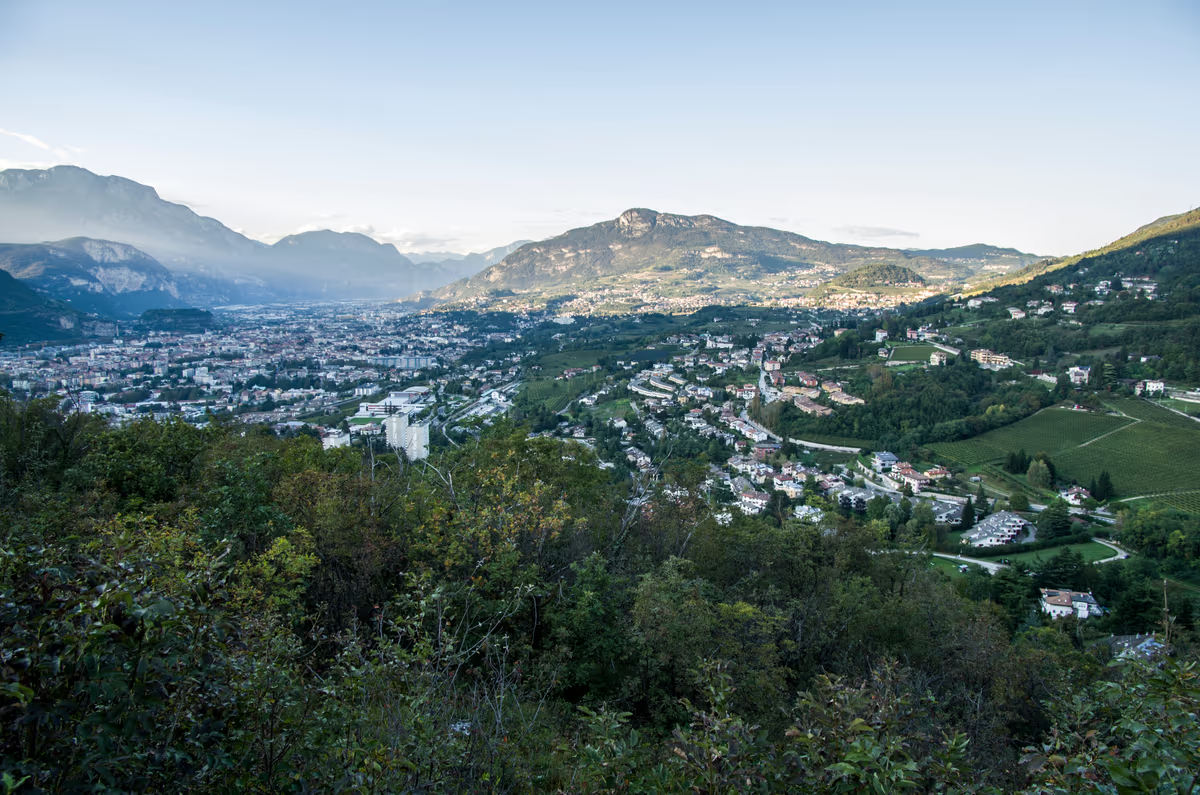
6. The Pyramids of Segonzano, the sculptures of time in Val di Cembra
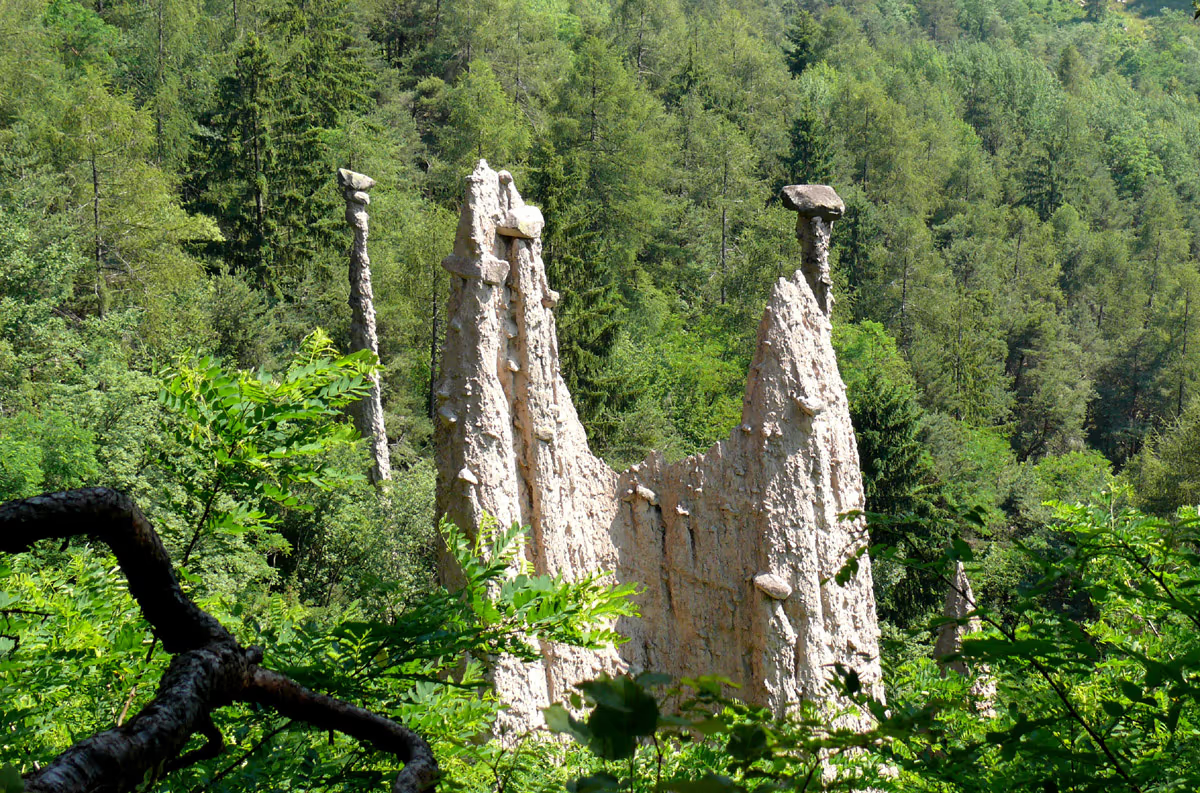
In Val di Cembra, along the Avisio stream, lies one of the rarest geological phenomena in Trentino. The Pyramids of Segonzano are tall columns of earth and clay, some up to twenty metres high, each topped by a porphyry boulder balanced on the tip. They look like ancient sculptures, but they are the work of time and nature: they are born from the deposits left by the glaciers of the last ice age, about twenty thousand years ago.
The boulder on top protects the earth beneath it, while the rain erodes everything around, slowly shaping the pyramid form. It is an almost unreal landscape, discovered along a scenic trail suitable for families too. It is reached by car in Val di Cembra, north east of Trento, and the climb along the path offers glimpses over the valley. It is worth wearing comfortable shoes for the trail.
Where to stay for a journey into ancient Trentino
If you look at where these places are, you notice one thing: much of the archaeology of Trentino revolves around a few convenient bases. Trento is the heart of it all, with the underground Roman city, the three ancient hills and Doss Trento a stone's throw from the centre. From here you set off easily towards the other sites: the pyramids of Segonzano in Val di Cembra remain a fine half-day trip, while Lake Ledro with its pile dwellings is reached in the direction of Lake Garda.
This is why Trento and the lake area of the Valsugana, around Caldonazzo, Levico and Pergine, are an ideal base also for those who travel for history and archaeology: in the morning you can be on a beach and in the afternoon walk inside a Roman city. Rovereto is another excellent base, close to the centre and to the southern valleys. The valleys further west, such as Val di Sole and Val Rendena, are perfect for those who want to combine the mountains with a trip to the ancient sites.
We at Italy Holiday welcome guests in these very areas, in homes designed to make you feel at home from the very first moment. If you dream of a holiday made of lakes in the morning and ancient stones in the afternoon, discover where to stay near the archaeological sites of Trentino and set off to explore its most ancient history.
Digital partner for holiday home owners since 2022.